
Decking
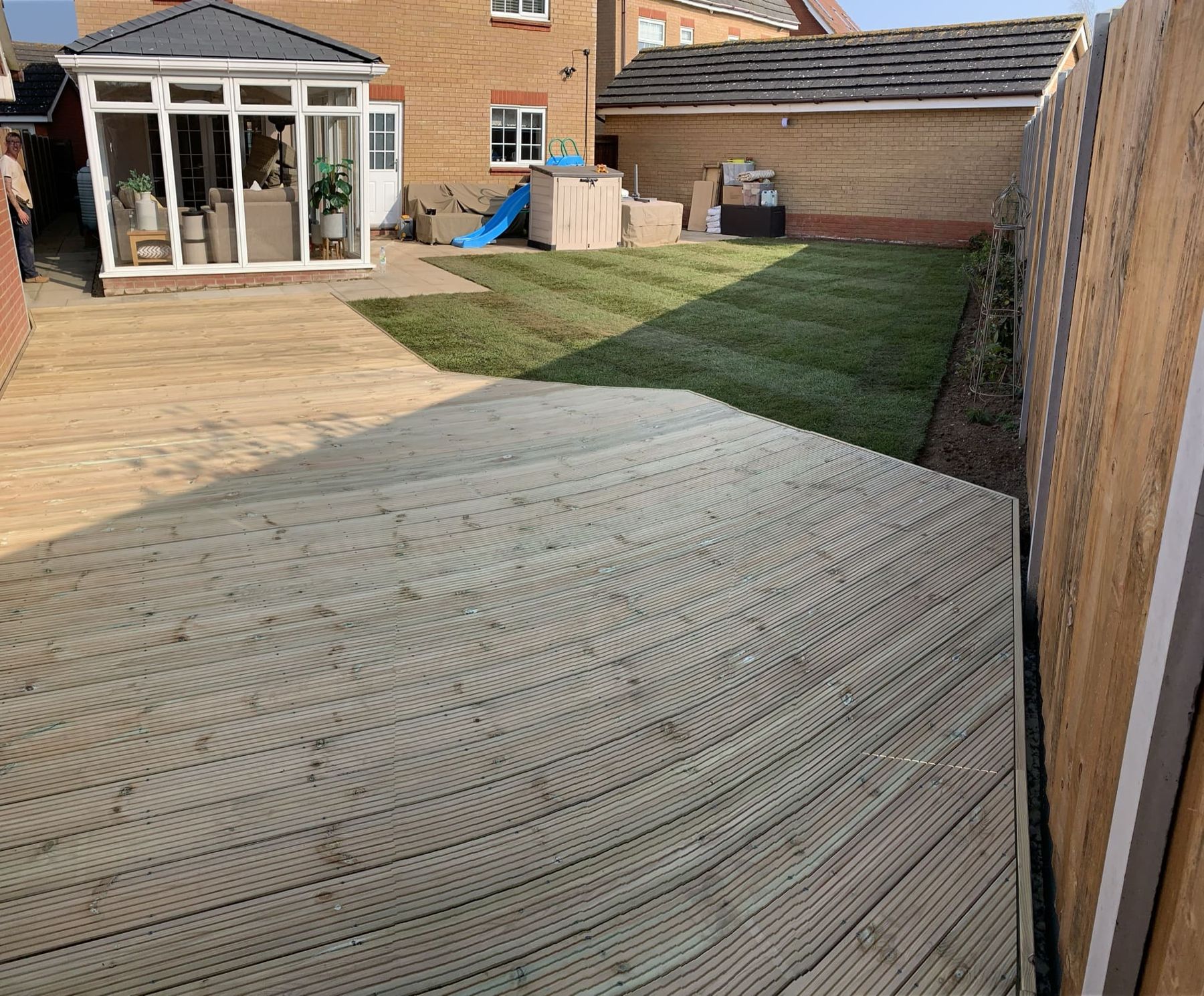
MCH Landscaping designs and builds timber and composite decking for homes in Lowestoft and across Norfolk and Suffolk.
Decking that extends the house into the garden
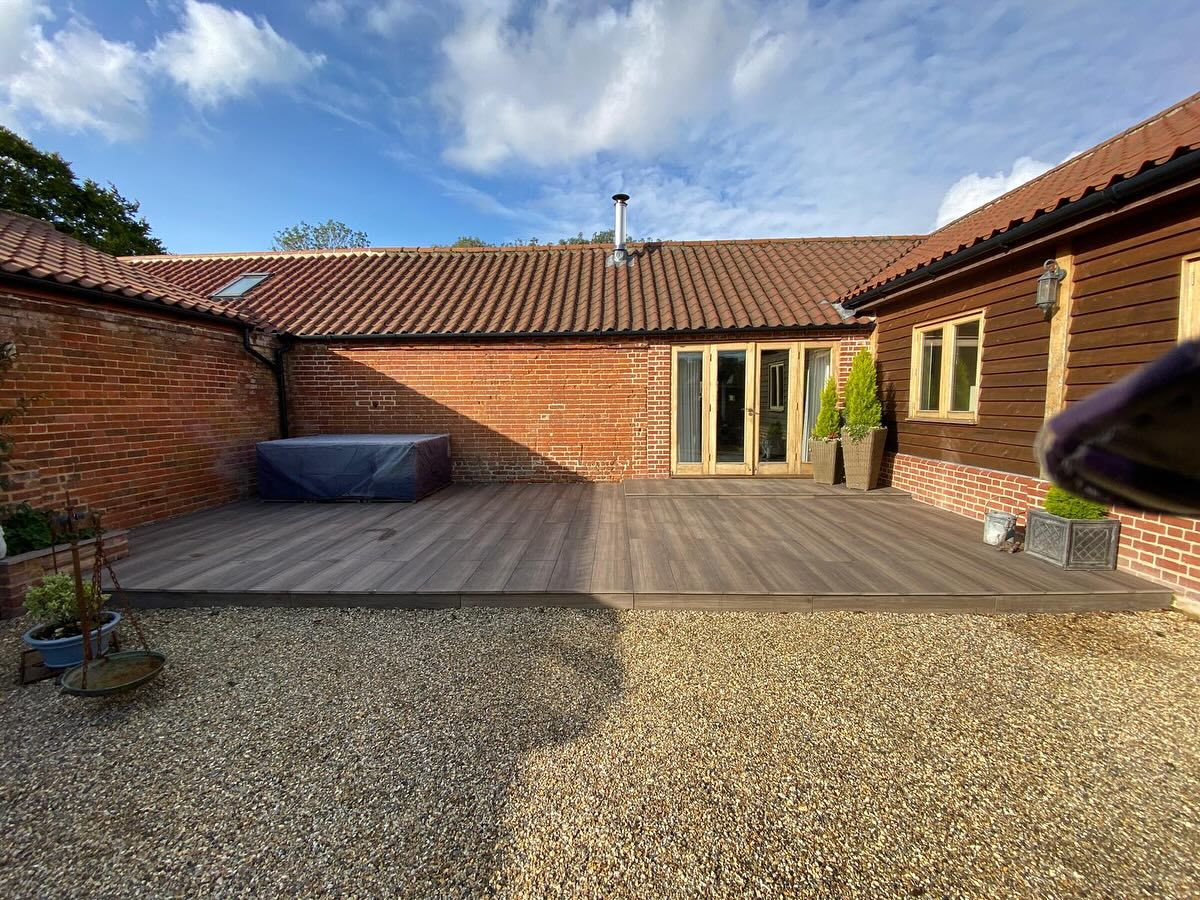
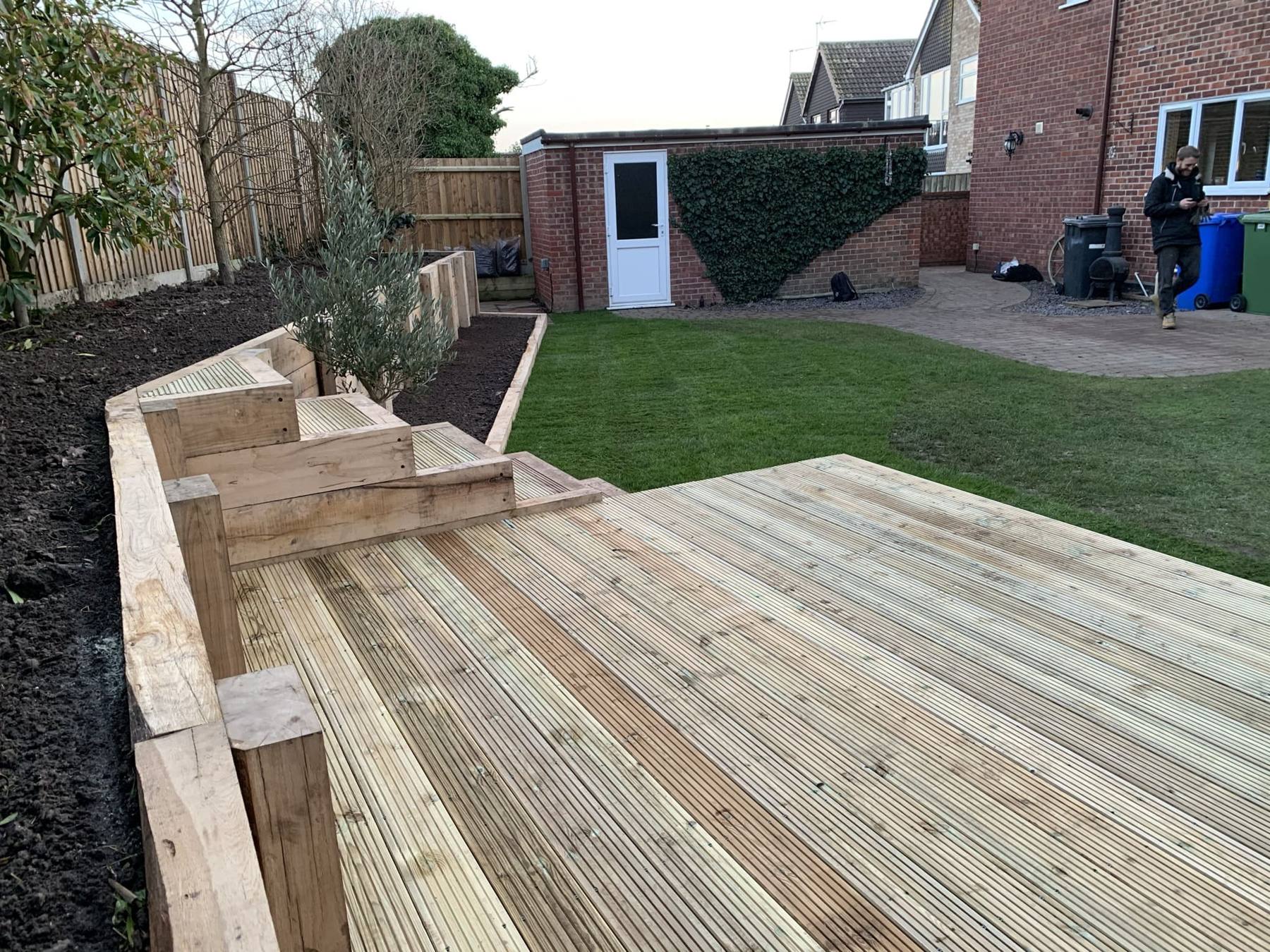
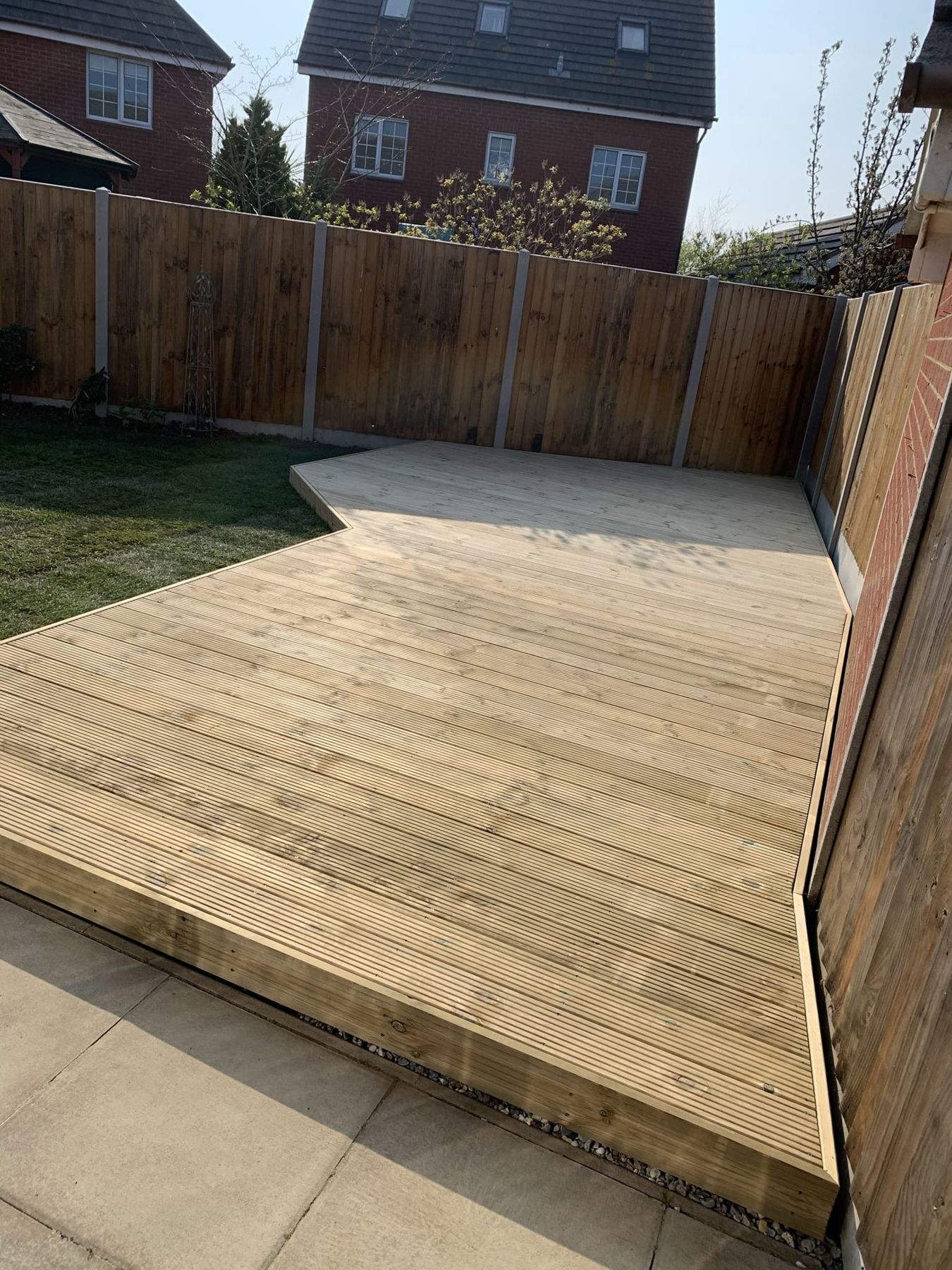
A deck gives you an outdoor room: somewhere to eat, sit or entertain that is level with the house, even where the garden slopes away. It can sit outside the back door, wrap around a corner, step down in levels or sit at the far end of the garden in the evening sun.
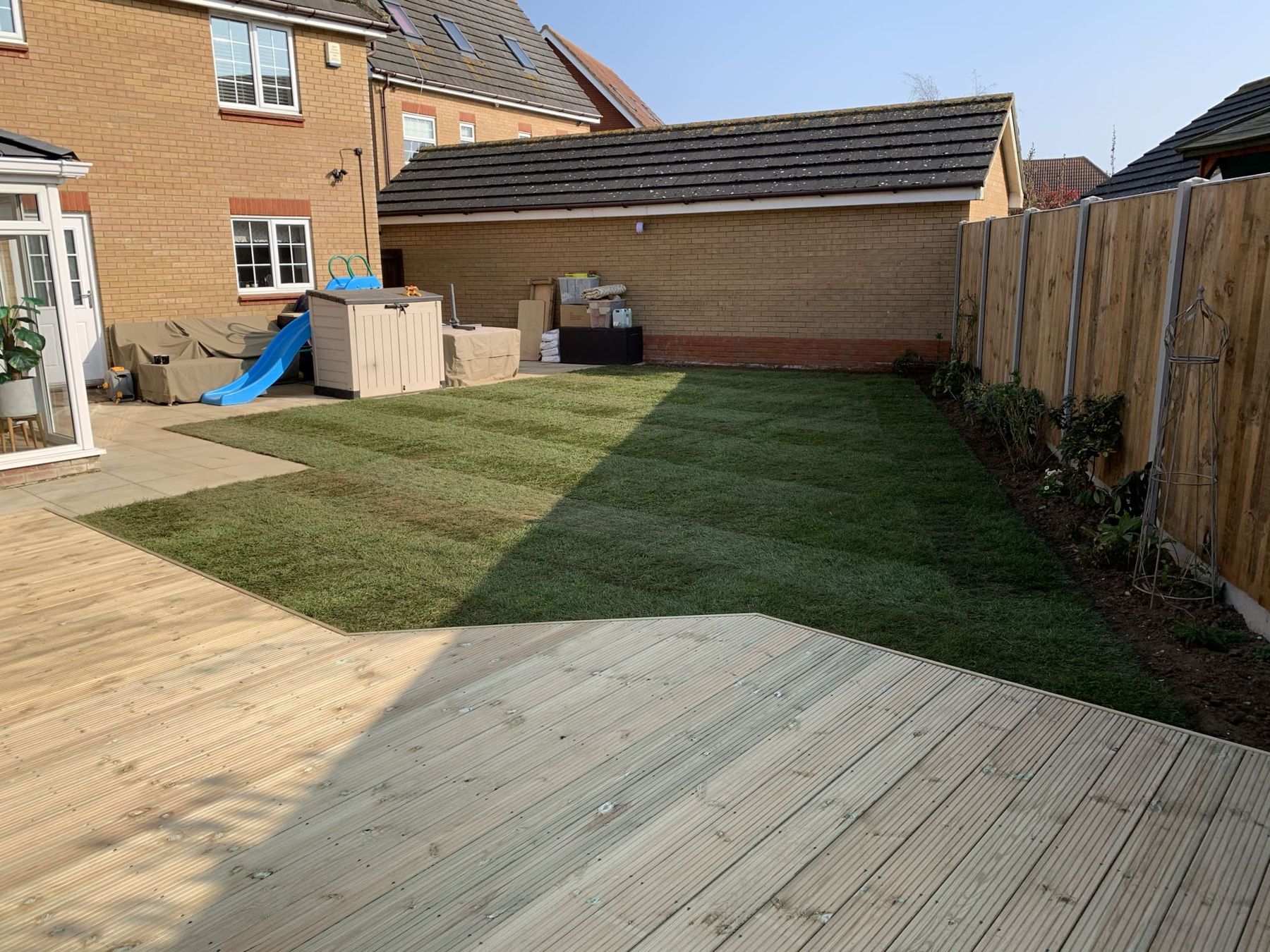
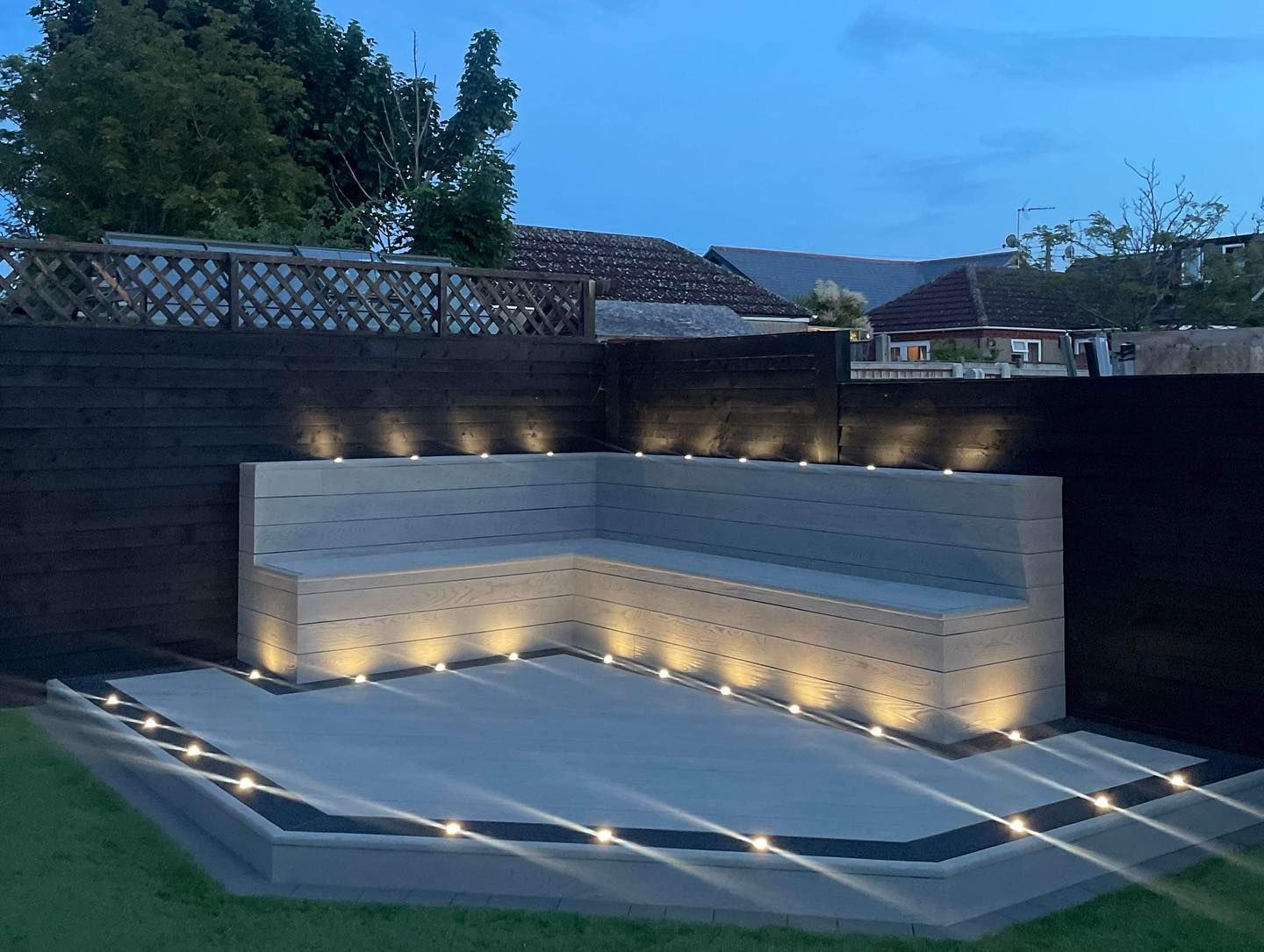
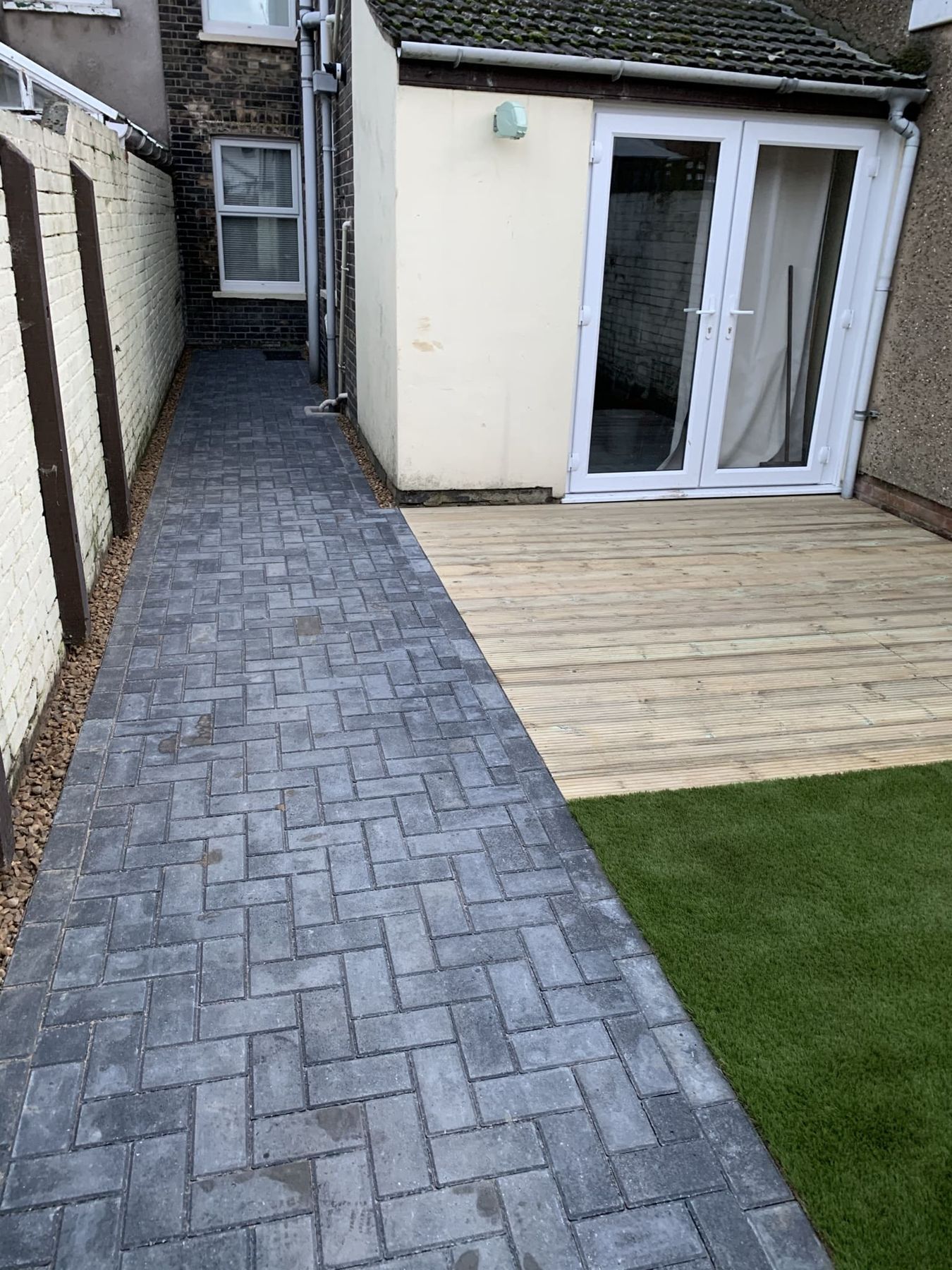
We build decks in timber and in composite, with steps, built-in seating and lighting where you want them, and we repair and maintain existing decks too. Decking often comes as part of a bigger job, alongside a new lawn, a patio or raised sleeper beds, so it is planned with the rest of the garden.
What a decking job includes
-
Design and layout
Size, shape, levels and the direction of the boards agreed with you, alongside the rest of the garden.
-
Ground preparation
Clearing and levelling the ground, with a weed membrane beneath the frame.
-
A solid frame
Posts, bearers and joists set out to suit the deck, the ground and the boards chosen.
-
Boards and fixings
Timber or composite boards laid and fixed, with fascia boards to finish the edges.
-
Steps, seating and lighting
Steps, built-in benches, balustrades and low-level lighting where they are part of the design.
-
Repairs and maintenance
We also repair tired or damaged decks and help keep existing ones in good order.
What to plan before a new deck
-
Height and planning permission
Decking more than 30cm above the ground needs planning permission, and so can decks that, with other outbuildings, cover more than half the garden. Most ground-level decks need none.
-
Timber or composite
Timber is natural and costs less to start with but needs treating from time to time. Composite costs more but needs little more than a wash, and does not splinter.
-
Sun, shade and wet ground
Decks in deep shade stay damp and grow algae, which makes them slippery. A sunny, open spot dries quickly and stays nicer to use.
-
Air and access underneath
Air needs to move under a deck to keep the frame dry. Think too about any drains or covers that must stay reachable.
-
How it meets the house
Steps, door thresholds and the damp-proof course all affect the finished height next to the house.
Good to know
-
Timber needs a little care
A timber deck should be cleaned and treated with a decking oil or stain every so often to keep it looking its best.
-
Composite can get warm
Darker composite boards can feel hot underfoot in strong summer sun. Lighter colours stay cooler.
-
Grooved or smooth boards
Grooves do not make timber boards less slippery on their own; keeping them clean of algae does more.
-
Lighting needs an electrician
Low-level deck lights are best planned before the boards go down, with the electrical work done by a qualified electrician.
How a decking job works
-
Consultation and planning
We visit, look at the space and the levels, and talk through how you want to use the deck and your budget.
-
Design and material selection
We agree the size, layout and finish, and help you choose between timber and composite.
-
Installation
We prepare the ground, build the frame and lay the boards, steps and any seating.
-
Finishing touches and aftercare
We fit fascias and lighting where planned, clear the site and tell you how to look after the deck.
Questions customers ask
Should I choose timber or composite decking?
Timber is natural and has a lower starting cost but needs regular treatment. Composite costs more but needs very little upkeep. We can talk through which suits your garden and how much maintenance you want.
Do I need planning permission for decking?
Not usually. Decking more than 30cm above the ground needs planning permission, and so can decking that, with other outbuildings, covers more than half the garden.
Can you add steps, seating or lighting?
Yes. Steps, built-in seating and low-level lighting can all be designed into the deck. Lighting circuits are electrical work for a qualified electrician.
Can you repair my existing deck?
Yes. We repair and maintain existing decks as well as building new ones.
How do I stop a deck getting slippery?
Keep it clean. Algae makes any deck slippery, especially in shade, so a regular brush and wash does more than anything else.
Can decking be part of a bigger garden project?
Yes, and it often is. We regularly build decks alongside new lawns, patios and raised beds as part of a whole garden.